Your 24/7 AI Coworker for Insurance
Forward a client email, loop Gemma into a text thread, or give your insureds a number to call. Gemma runs the intake, works up the quote, fills the ACORD, and hands it back for your review, so your day goes to placement and bind instead of the inbox.


How Gemma fits into your day.
Gemma works in the channels your insureds already use. Nothing new to log into, and you decide what Gemma is cleared to send.
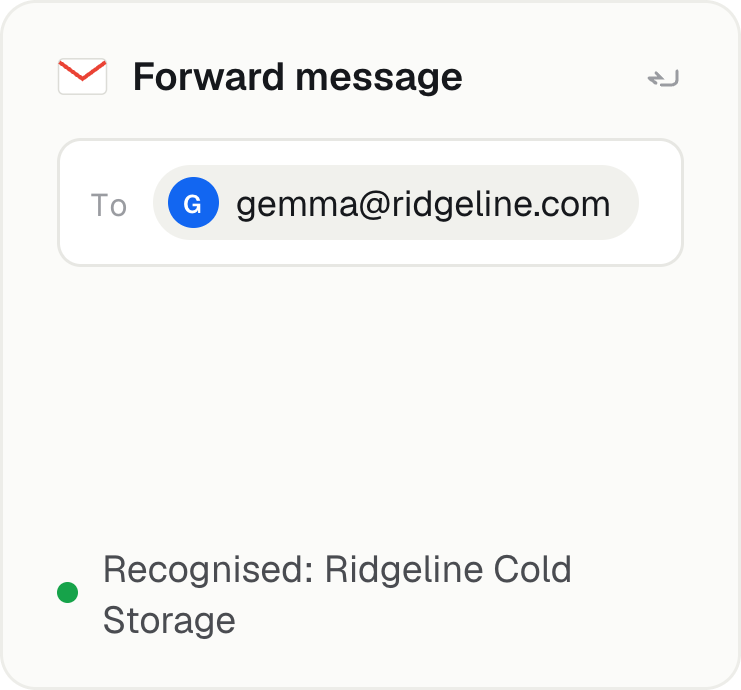
Forward or loop Gemma in
Send Gemma a client email or add Gemma to a text thread. The tone, the history and the account carry over from prior conversations with the same insured.
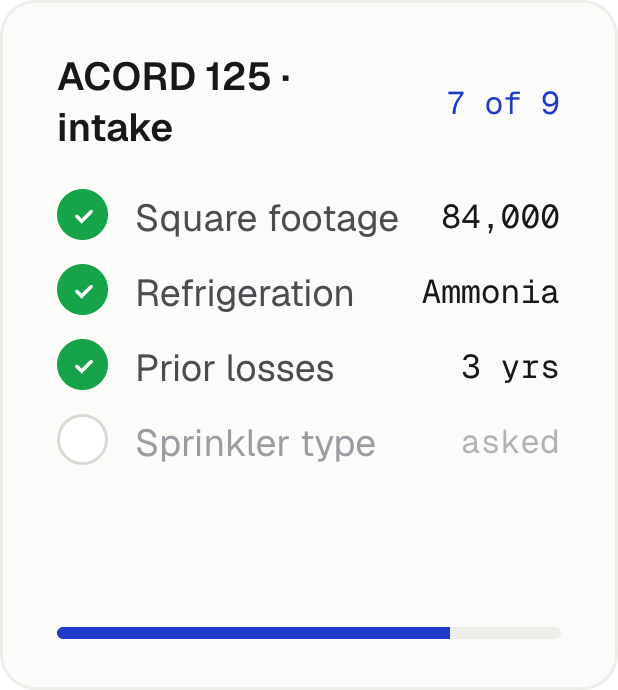
Gemma drafts and gathers
Gemma collects the missing intake in the thread, works up the quote, or fills the ACORD, and remembers the insured across channels so nothing is asked twice.
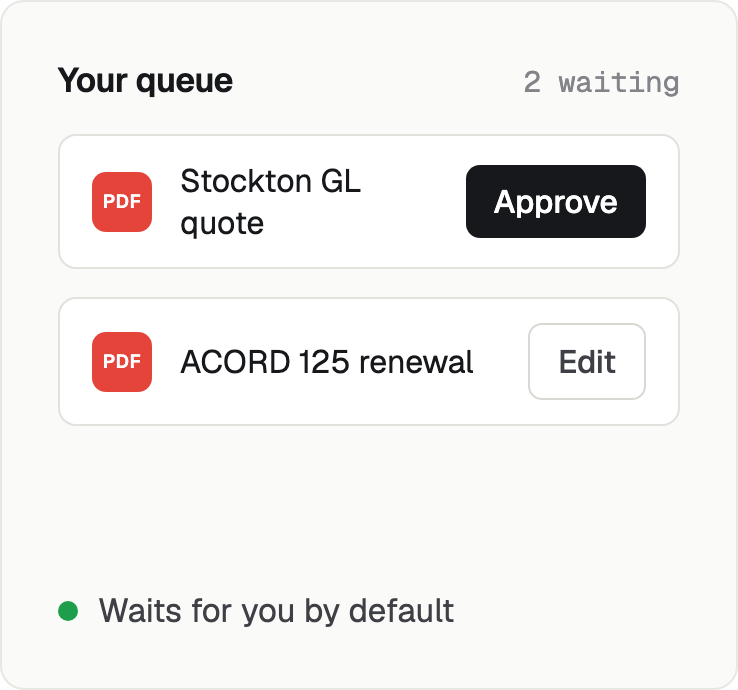
You review and bind
Every submission package, quote and filled form lands in your queue for you to approve, edit or take over. Routine sends you have cleared go straight out. Anything binding, and anything new, waits for you.
What Gemma handles today.
The scope is deliberately narrow. These three workflows account for most of what sits in a broker inbox on any given morning.
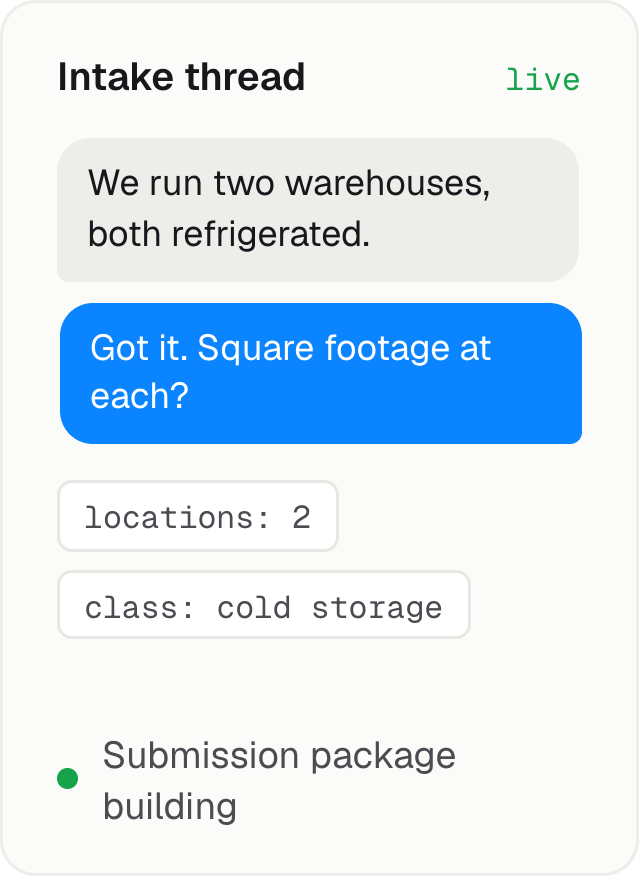
Gemma walks the insured through a structured question set in their normal thread and hands you a clean submission ready for carrier markets.
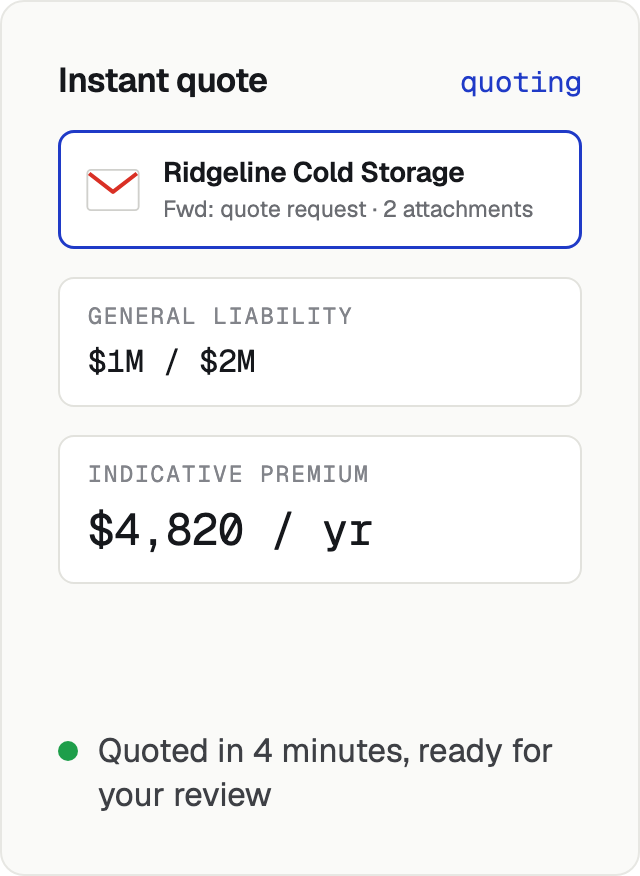
Email Gemma the risk, or forward the insured’s request. Gemma works up the submission from what is in the thread, asks for anything missing, and replies with an indicative quote you can review and send on, in minutes rather than days.
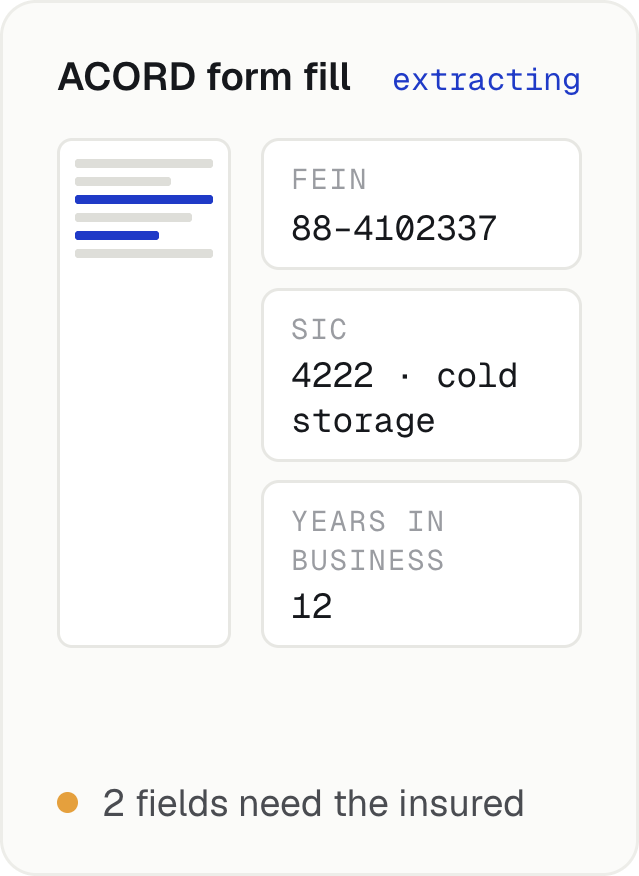
Forward an inbound email or a photo of an existing application. Gemma extracts the fields, asks the insured for what is missing, and returns a filled PDF.
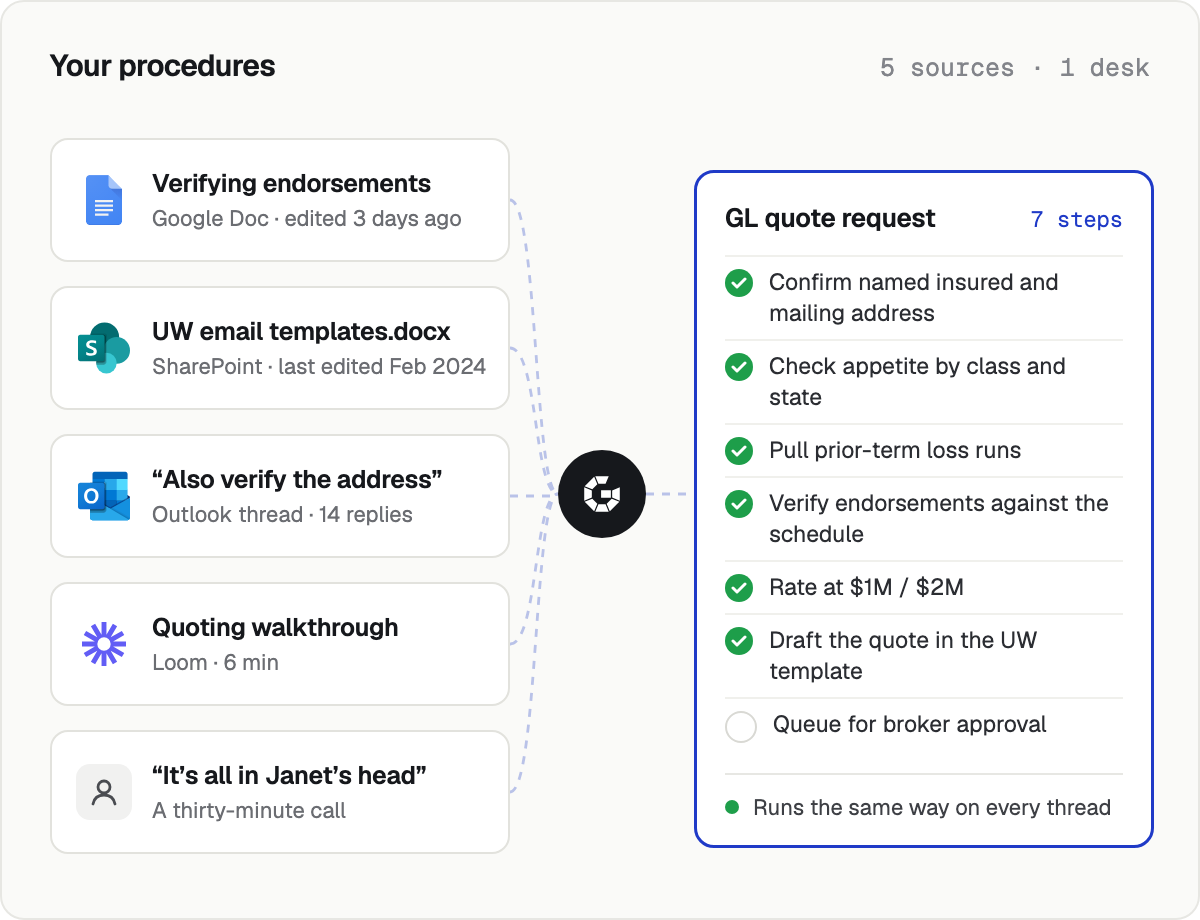
Bring your own SOPs.
Three channels, one brain.
Gemma is the same Agent on every surface. An insured who texts on Tuesday, emails on Thursday and calls on Friday picks up exactly where they left off. Ask Gemma is your side of the same brain, for questions about any account, thread or document in your book.
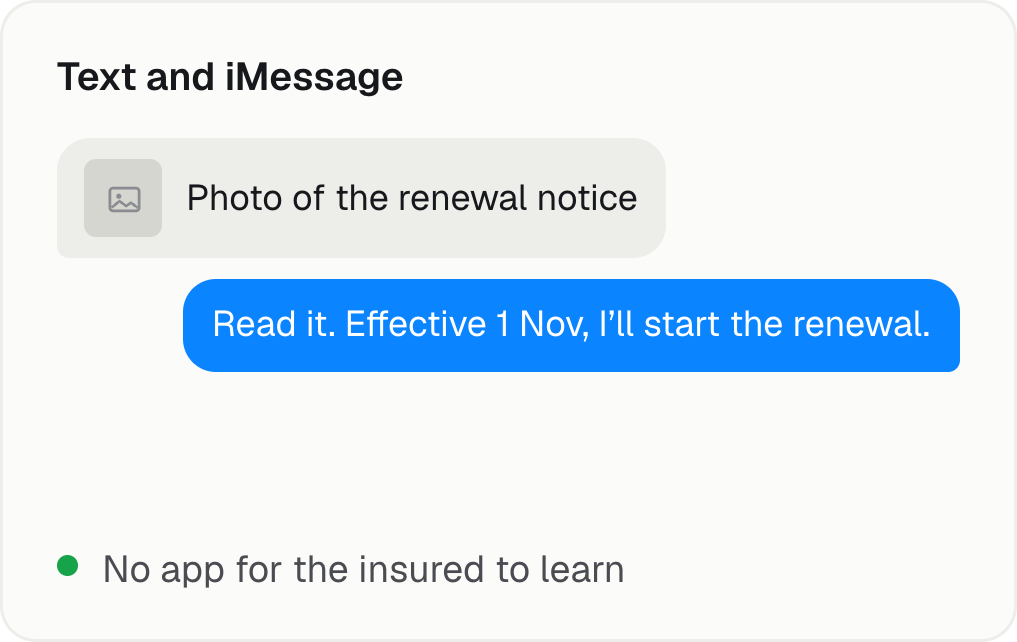
Replies read as native: attachments, photos and PDFs handled in the thread. Most insureds never think about who is on the other end.
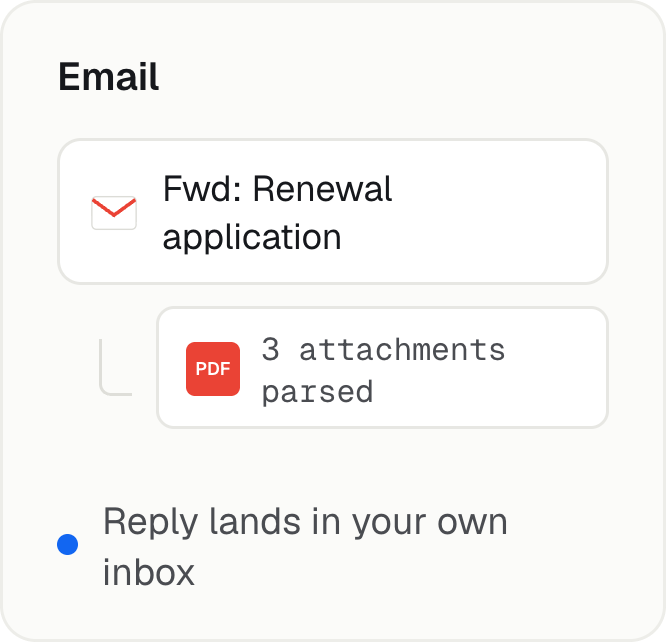
Forward a client thread and Gemma replies in-thread, pulls apart the attached PDFs, and lands the response back in your own inbox.
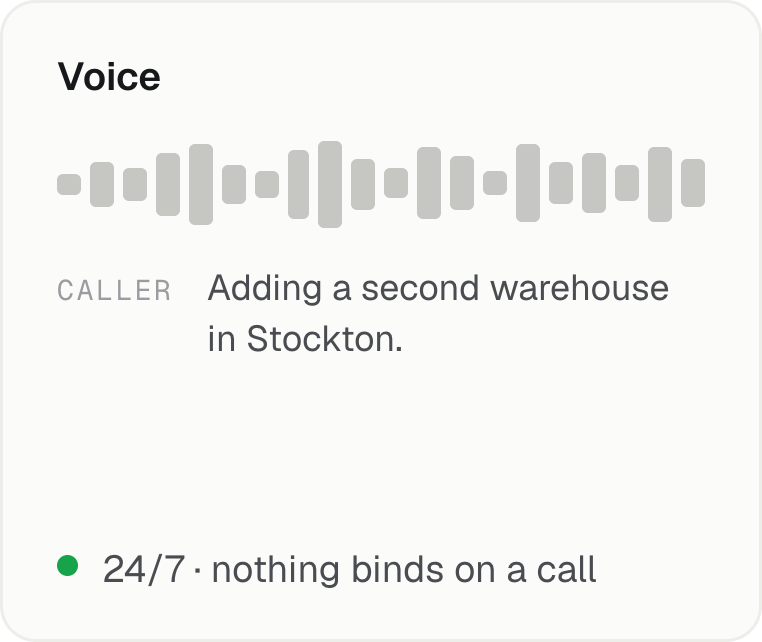
A phone number your insureds can call any hour, any day. Gemma answers, takes the request, gathers what is missing, and the call lands in your queue as a transcript and a next step.
Built by agency owners for agency owners.
We run a commercial brokerage ourselves. Gemma works our book every day, so what ships is what we would trust with our own clients.
Questions brokers ask.
What comes up on the first demo, answered plainly.
How autonomous is Gemma?+
Broker in the loop by default. Gemma drafts replies, fills forms and works up quotes, and a person reviews before anything reaches a carrier or goes out on a binding basis. You decide how much Gemma handles alone on routine asks like chasing an insured for missing details.
Which channels does Gemma run on?+
Text, including iMessage, email, and a phone number that answers 24/7. One memory sits behind all three, so an insured never repeats themselves when they switch channel.
What does a seat include?+
One broker seat, unlimited insured threads and calls across all three channels, intake, instant quotes by email, ACORD form fill, extraction on inbound documents, and Ask Gemma for questions about your own book.
Where does our data live?+
Conversations, attachments and submissions sit on our secured infrastructure, and memory of returning insureds persists across conversations. Your book is never used to train models.
What is Gemma not doing yet?+
Binding policies, issuing payments and submitting directly into carrier portals are out of scope today. Agency management system integrations are rolling out: some are ready now and the rest are in the pipeline. We would rather be explicit than oversell it.
Does Gemma connect to our agency management system?+
Where the integration is ready, yes, starting with the systems on this page, and more are in the pipeline. Where yours is not connected yet, Gemma works from the documents you and your insureds share, and the workflows do not change when the connection lands.
See Gemma on a real workflow.
We run the text flow live, walk through a filled ACORD, and answer your data and pricing questions. Bring a real account and we will use it.